

Marina Yachting’s coastal style is less about dressing for a day on a boat and more about bringing useful, nautical design into an everyday wardrobe. Think practical layers, considered details and a relaxed Italian sensibility: pieces that can move from a breezy waterfront walk to a city commute.
The brand’s outerwear is a natural place to begin. Its history is closely tied to the sailor’s coat, while contemporary collections have included parkas, padded jackets and lighter zip-front styles. Here’s how to read the label’s maritime references and choose a jacket that works for your climate, routine and personal style.
A heritage rooted in practical outerwear
Marina Yachting traces its origins to Genoa in 1878, when sailor Nicolò Gavino imported British naval “Pickot” coats. In 1972, Giorgio Gavino developed the family business into a fashion brand, opening a Marina Yachting store in Genoa and introducing its spinnaker logo. The label’s history is outlined by Punzi 1949.
That origin helps explain the appeal: the coastal references have a functional starting point. A peacoat’s structured shape, a parka’s coverage or a stand collar’s clean line can bring character without requiring a head-to-toe nautical outfit. The key is to treat maritime details as accents rather than a theme.
Start with the right jacket for your weather
Outerwear works hardest when it suits the conditions you actually face. Consider temperature, wind, rain and how much layering you’ll want underneath before choosing a silhouette.
For everyday layering: a lightweight zip jacket
A light jacket is a useful option for mild days, travel and changing temperatures. Look for a comfortable fit through the shoulders, a secure front closure and pockets that suit your routine. A black polyamide Marina Yachting jacket listed by Simon is described as having a zip closure, two exterior pockets and two interior pockets. Those practical details can make a simple shape more versatile.

For styling, wear a lightweight jacket over a fine knit or a plain shirt. Dark neutrals are easy to pair with denim, chinos and understated trainers. If the jacket has a visible logo or distinctive trim, keep the rest of the outfit simple.
For colder days: a padded jacket or parka
When warmth and coverage matter, consider a padded jacket or parka. Marina Yachting’s range on Punzi includes a white women’s jacket and a light-blue women’s parka. These examples show how the category can shift from a shorter, cleaner jacket to a longer, more covered silhouette.
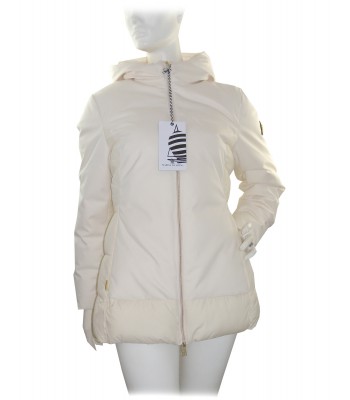
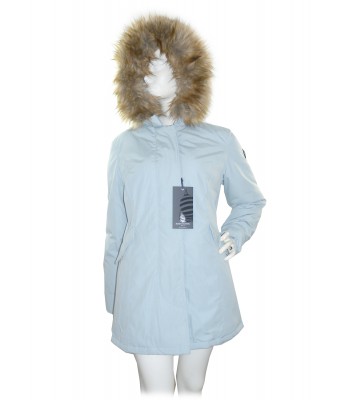
Choose a parka if you prefer added length and coverage, especially over knitwear. A shorter padded jacket may feel easier for everyday movement and pair neatly with jeans or tailored trousers. Before purchasing, check the garment measurements, closure details and care instructions on the product listing; appearances alone won’t tell you how warm or weather-resistant a piece is.
Look for details that serve a purpose
Nautical style can be communicated quietly. A spinnaker emblem, metal buttons, rope-inspired trim or a high collar may give a jacket its identity without turning it into costume. In some collections, the references are more technical: a Marina Yachting capsule created with Griffin Studio, the Black Storm Project, focused on parkas and down jackets, with features such as adjustable cuffs and weather-conscious fabrics. WhyNot Magazine’s overview offers background on that project.
When comparing pieces, ask what each feature adds. A hood can be useful in unsettled weather; adjustable cuffs help refine the fit around sleeves; pockets offer everyday convenience. Treat technical claims with care: confirm a garment’s fabric and protection details on its product page rather than assuming that every jacket with a maritime look is waterproof.
A simple way to style coastal outerwear
The easiest approach is to balance relaxed outerwear with clean, familiar pieces.
- For a casual day: pair a lightweight jacket with a fine-gauge knit, straight-leg jeans and low-profile trainers.
- For a sharper look: layer a dark jacket over a shirt and tailored trousers. Keep accessories minimal.
- For a cold-weather outfit: wear a longer parka over a warm knit, adding sturdy boots for a practical finish.
- For a lighter palette: combine a white or pale-blue jacket with neutral trousers and understated accessories.
Navy, white, black and grey are natural foundations for a coastal wardrobe. A pale jacket can brighten a muted outfit, while darker outerwear offers a more understated option for frequent wear. If a jacket already has prominent details, let it lead: avoid piling on stripes, rope motifs and multiple logos at once.
A practical fit check
Try the jacket with the layer you expect to wear underneath. It should close comfortably without pulling across the chest, and the shoulders should sit neatly without restricting movement. Check sleeve length with your arms relaxed, then reach forward to see whether the body rides up. For longer coats and parkas, walk and sit in the garment to make sure the length feels manageable.
Pay attention to the product description as well as the photographs. Fabric composition, lining, closure type, pocket placement and care instructions can help you decide whether a piece suits regular use or occasional layering. For international shoppers, sizing conventions can differ, so compare the garment’s size information with a jacket you already own.
Coastal, not costume
Marina Yachting’s strongest appeal is the balance between maritime heritage and everyday wearability. A well-chosen outer layer can carry the nautical character on its own, while the rest of the outfit stays modern and uncomplicated.
For complementary wardrobe pieces, explore women’s clothing and men’s clothing at 78+ Designers. Start with the weather you dress for, choose a silhouette that fits your routine, and let one or two considered details provide the coastal note.


