

Table of Contents
- What You’ll Need to Assess a Garment
- How to Check Fabric Quality Before You Buy
- How to Identify Quality Stitching on Any Garment
- Signs of Well-Made Clothing: A Room-by-Room Checklist
- Step 1: Inspect the Seams and Hems
- Step 2: Check Buttons, Zips and Fastenings
- Common Mistakes When Spotting High Quality Clothing
- Conclusion: Build a Wardrobe That Lasts
- Frequently Asked Questions
Last Updated: September 25, 2026
What You’ll Need to Assess a Garment
Learning how to spot high quality clothing comes down to knowing exactly where to look, and most shoppers never check the right places. At 78+ Designers, we know that a garment’s true worth shows up in its construction, not its label. A quick, focused inspection of fabric weight, seam density and fastening hardware tells you more in two minutes than a brand name ever will.
This guide walks through the checks to apply before a piece earns a place in a curated selection. The good news? Quality is observable. You don’t need a trained eye, just a repeatable routine.
Below, we’ll show you exactly how to assess fabric quality, identify quality stitching, and recognise the signs of well-made clothing before you commit.
The three checks that catch most poor-quality garments: pinch the fabric for weight and recovery, stretch a seam to test for gaps, and inspect the buttonhole stitching. Two minutes, three tests.
How to Check Fabric Quality Before You Buy
Fabric quality is assessed through three quick tests: the pinch test for weight and drape, the rub test for pilling resistance, and the light test for weave density. Natural fibres such as wool, cotton, linen and silk generally outperform synthetics in breathability and longevity, though a small percentage of elastane can improve fit retention.
Start with the pinch test. Gather a section of the fabric between thumb and forefinger. A dense, well-woven cloth feels substantial without stiffness. If it feels thin or papery, the weave is likely loose and will wear through quickly.
Next, rub the surface firmly with your thumb. Cheap blends pill within weeks of regular wear; better cloth resists it. Finally, hold the fabric up to light. If you can see straight through the weave, expect it to lose shape after a few washes.
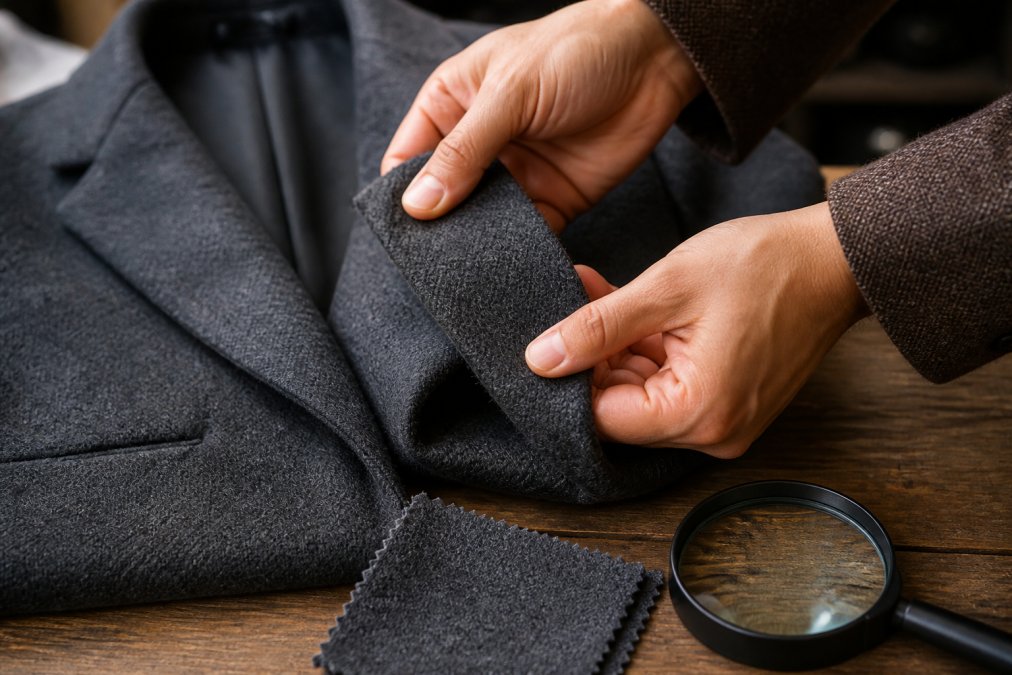
A common mistake is judging fabric by feel alone. Brushed finishes can make a cheap blend feel luxuriously soft in the shop, then pill badly after three wears. The rub test exposes this.
How to Identify Quality Stitching on Any Garment
Stitching quality is measured by stitch density, consistency and seam finish. A well-stitched garment typically shows 8-12 stitches per inch on visible seams, with evenly spaced, straight lines and no loose threads or skipped stitches.
Turn the garment inside out. This is where the real story lives. Look for:
- French seams on lightweight fabrics, where raw edges are fully enclosed
- Overlocked or bound seams on structured pieces, with no fraying edges
- Reinforced stress points at shoulders, armholes and crotch seams
- Consistent thread tension, with no puckering or wavy lines
Runs in the stitching, uneven spacing or threads that pull loose under a gentle stretch are all red flags. If a seam gapes when you tug it lightly, it will fail under real wear.
UK Fashion and Textile Association guidance on garment quality standards
Signs of Well-Made Clothing: A Room-by-Room Checklist
Well-made clothing shows consistent hallmarks across every category, and a structured checklist makes the assessment faster. Use this as your reference when shopping, whether in person or online.
| Check | High Quality | Low Quality |
|---|---|---|
| Seams | Enclosed, even, reinforced | Raw edges, loose threads |
| Buttons | Natural material, cross-stitched | Plastic, single-thread attachment |
| Zips | Metal or branded, smooth glide | Stiff, snagging, unbranded |
| Lining | Full, attached at stress points | Partial, loose, or absent |
| Pattern matching | Aligned at seams | Misaligned stripes or checks |
| Hems | Blind-stitched, invisible | Visible machine stitch line |
Pattern matching is the tell most shoppers overlook. On a checked or striped garment, the pattern should align where panels meet at the shoulder and side seams. Misalignment signals rushed, high-volume manufacturing.
Check the spare button packet. Brands that include one with quality thread matching the garment are usually confident about the construction. A missing spare on a premium-priced piece is a small but telling omission.
Step 1: Inspect the Seams and Hems
Start your inspection at the seams and hems, where construction shortcuts hide first. Run your finger along the inside of every major seam. It should feel smooth and flat, with no bulk or roughness.
Pay particular attention to:
- Side seams: should run straight, not twist when the garment is laid flat
- Shoulder seams: reinforced with tape or binding on structured pieces
- Hem depth: deeper hems (3-5 cm on trousers and skirts) allow for alteration and indicate better fabric allocation
- Armhole seams: the highest-stress area on any top; check for double stitching
A hem that curls upward after one wash means the fabric wasn’t properly stabilised before cutting. That’s a construction failure, not a laundering error.
Step 2: Check Buttons, Zips and Fastenings
Fastenings are the cheapest place for a manufacturer to cut costs, which makes them the most reliable indicator of overall quality. Buttons should be made from natural materials such as horn, corozo or mother-of-pearl, and attached with cross-stitching using four holes rather than two.
Zips deserve close attention. Metal zips from established makers glide smoothly and resist jamming; cheap plastic zips snag, catch and fail. Test every zip on the garment by running it fully up and down twice. If it sticks, walk away.
British Standards Institution guidance on textile testing and durability
Also check buttonholes. They should be densely stitched with clean edges, with no fraying or loose threads. On tailored jackets, working cuff buttons are a mark of genuine craftsmanship rather than decoration.
Common Mistakes When Spotting High Quality Clothing
The biggest mistake shoppers make is equating price with quality. A high price tag reflects marketing, retail positioning and brand prestige as much as construction. A modestly priced garment with dense stitching and natural-fibre fabric will outlast an expensive piece with glued seams.
Other frequent errors:
- Trusting the label over the garment. “Made in Italy” describes origin, not standards.
- Ignoring the lining. A cheap polyester lining in a wool coat causes overheating and wears through fast.
- Skipping the stretch test. Gently tugging a seam reveals more than any visual inspection.
- Overlooking care requirements. Delicate fabrics needing specialist cleaning add long-term cost.
WRAP UK textile sustainability and durability research
Never judge quality from photographs alone, especially online. Lighting and styling hide construction details. Always check the returns policy before buying remotely, and inspect the garment thoroughly the moment it arrives.
Conclusion: Build a Wardrobe That Lasts
Spotting quality takes practice, but the payoff compounds. Every well-made piece you add reduces the churn of replacing worn-out garments, and a wardrobe built on solid construction simply looks better for longer.
That’s the principle behind 78+ Designers. We curate premium men’s and women’s clothing and accessories, so you spend less time second-guessing and more time wearing clothes that hold their shape. Every order includes a 30-day return policy, a 30-day money-back guarantee, 24/7 support with live web chat, and worldwide shipping.
Get started with 78+ Designers and build a wardrobe where every piece earns its place.
Frequently Asked Questions
What are the signs of high quality fabric?
High quality fabric feels dense and substantial, not thin or flimsy. Look for a tight weave where you can’t see light through it easily. Natural fibres like cotton, wool, silk and linen typically outperform synthetics in durability and comfort. Check the label for fibre content and origin. A good test is to gently stretch the fabric; it should recover its shape without sagging. If it pills or feels rough, it’s likely lower quality.
How can you tell if a garment is well-made by looking at the stitching?
Examine the stitching closely. Quality stitching is even, with no loose threads or skipped stitches. The thread should match the fabric colour and be appropriate for the material. Look for reinforced stress points like shoulders, armholes and pocket corners. A well-made garment will have clean, flat seams without puckering. If you see uneven lines or threads fraying, it’s a sign of poor construction.
Does a higher price tag always mean better quality clothing?
Not always. Price can reflect brand name, marketing or exclusivity rather than superior craftsmanship. A high price doesn’t guarantee quality. Instead, focus on the fabric, stitching and construction details. Some mid-priced brands offer excellent quality, while some expensive ones cut corners. Use the inspection tips in this guide to judge for yourself. Quality is about how a garment is made, not just what it costs.
What should I look for when checking clothing seams and hems?
Check that seams are straight and flat, with no puckering or loose threads. Hems should be evenly stitched and lie flat against the fabric. Look for seam finishes like French seams or bound seams, which prevent fraying and indicate higher quality. On trousers, check the hem allowance; a generous hem means the garment can be altered. Also, inspect the inside of the garment for clean finishing, as this shows attention to detail.


