

Table of Contents
- Why High End Fabrics Need a Different Approach
- Best Practices for Cashmere Care
- Essential Tools for Fabric Maintenance
- How to Handle Silk and Delicate Wool
- Professional Dry Cleaning vs Home Care
- Stain Removal on High End Fabrics
- Frequently Asked Questions
Last Updated: 29 September 2026
Why High End Fabrics Need a Different Approach
Learning how to maintain high end fabrics starts with accepting an uncomfortable truth: the fibres that make a garment feel extraordinary are usually the ones least equipped to survive rough handling. Cashmere, silk, fine merino and alpaca are delicate by construction, not by accident.
The mistake most people make is treating a cashmere jumper like a cotton one. They are not the same animal, literally or figuratively.
Cotton fibres are short, tightly spun and tolerant of heat and agitation. Luxury fibres are longer, finer and far more sensitive to friction, moisture and chemicals. According to UKFT guidance on textile fibre care, fine animal fibres and silk require gentler handling than mass-market cottons across washing, drying and storage. Get that distinction right and everything else follows.
Below, we break down fibre-by-fibre care, the tools worth owning, and when to hand the job to a professional.
Best Practices for Cashmere Care
Cashmere care comes down to three rules: wash rarely, wash cold, and never wring. A quality cashmere jumper does not need washing after every wear. Air it, brush it, and wash it only when it genuinely needs it.
Washing and Drying Cashmere Without Damage
Hand wash in cool water using a pH-neutral wool detergent, then press the water out gently rather than twisting. Lay the garment flat on a towel to dry, reshaping it as it dries. Never hang wet cashmere, as the weight of the water will stretch the shoulders and hem out of shape.
If you use a machine, choose a wool or delicate cycle at low temperature and place the item in a mesh laundry bag. A common mistake is reaching for standard detergent. Biological formulas contain enzymes that break down protein fibres, which is exactly what cashmere is.
Storing Cashmere to Prevent Moths and Pilling
Fold cashmere rather than hanging it, and store it clean. Moths are attracted to soil and food residue on fibres, not the wool itself. Airtight storage bags or a cedar-lined drawer both help, though cedar loses effectiveness as it ages and needs refreshing.
Pilling is not a defect. It is short fibres working loose through friction, and it happens to every natural fibre garment eventually. Remove pills with a cashmere comb or fabric shaver rather than pulling them off by hand, which drags more fibre to the surface.
Store cashmere with a lavender or cedar sachet, but keep the sachet off the fabric itself. Direct contact with essential oils can leave marks that are difficult to remove.
Essential Tools for Fabric Maintenance
The right tools for fabric maintenance cost less than replacing one good jumper. A basic kit covers cashmere, wool and silk without much outlay.
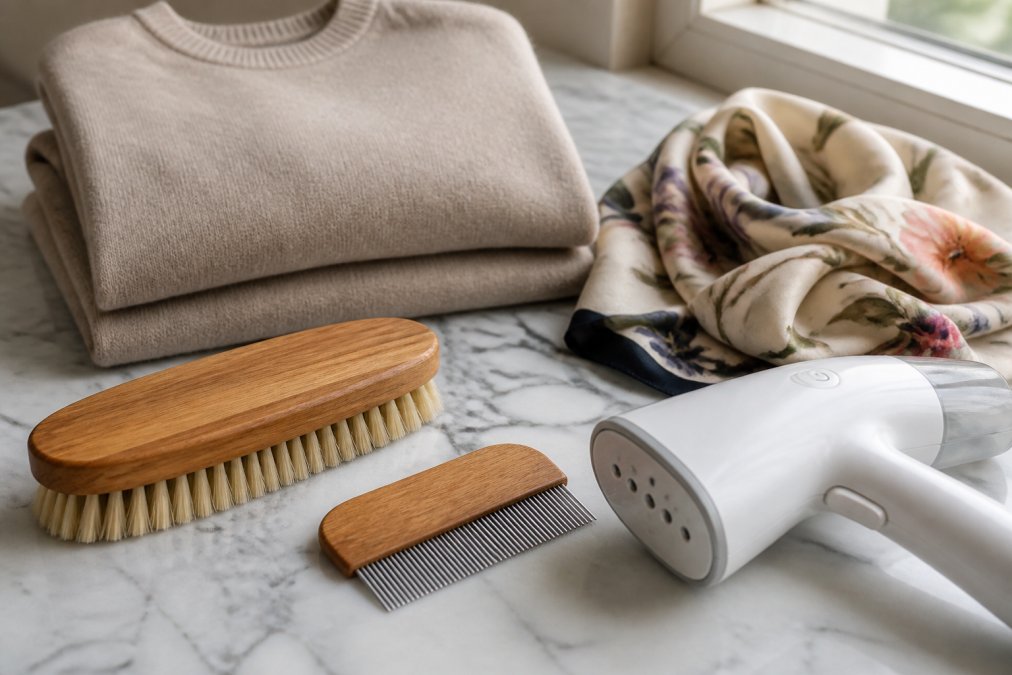
Brushes, Shavers and Steamers
A soft-bristled garment brush removes surface dust and revives the nap of wool between wears. A cashmere comb or fabric shaver deals with pilling. A handheld steamer lifts creases from silk and wool without the direct heat of an iron, which can scorch or glaze delicate fibres.
Steam rather than press. Silk especially marks easily, and a steam wand gives you control that an iron plate does not. Hold the steamer a few centimetres from the fabric and let the steam do the work.
| Tool | Best For | Frequency of Use |
|---|---|---|
| Soft garment brush | Wool, cashmere, tweed | After each wear |
| Cashmere comb | Pilling on knitwear | As needed |
| Fabric shaver | Heavy pilling, larger areas | Monthly |
| Handheld steamer | Silk, wool, creases | Before wearing |
| Mesh laundry bag | Machine washing delicates | Every wash |
How to Handle Silk and Delicate Wool
Silk and fine wool demand the same patience as cashmere, with one addition: silk is weaker when wet. Handle a damp silk garment as little as possible.
Wash silk by hand in cool water with a mild detergent, then roll it in a towel to absorb excess moisture. Dry it away from direct sunlight, which fades the dye. For wool, the same principle applies: cool water, gentle detergent, flat drying.
Never use chlorine bleach on either fibre. It destroys the protein structure and the damage is permanent. If a stain needs treating, spot-test any product on an inside seam first.
Never tumble dry silk or fine wool, even on a low setting. The agitation and heat cause irreversible shrinkage and felting, and no amount of steaming will bring the garment back.
Professional Dry Cleaning vs Home Care
Professional dry cleaning versus home care is not an either-or decision. It depends on the garment, the fibre and the finish.
Dry cleaning suits structured tailoring, lined jackets, and anything with a delicate construction that water could distort. Home care suits knitwear, scarves and simple silk pieces where you can control the temperature and handling. A common mistake is dry cleaning knitwear routinely, since the solvents can strip natural oils from the fibres over time.
Check the care label and follow it. If a garment says dry clean only, that instruction usually reflects the construction, not just the fibre. According to the UK Fashion and Textile Association, following care labels correctly extends garment life and reduces textile waste.
Match the method to the garment, not the fibre alone. A cashmere scarf and a cashmere-lined blazer need different care even though they share a material.
Stain Removal on High End Fabrics
Act fast, blot don’t rub, and use the least aggressive method first. Most stains on luxury fabrics come out with cool water and patience if you deal with them within the hour.
For grease, sprinkle cornflour on the stain, let it sit, then brush it away before treating with a mild detergent. For red wine, blot immediately and rinse with cool water. For ink, professional help is usually the safer route on silk. When in doubt, stop and seek advice rather than risk setting the stain permanently.
If you are sourcing pieces worth caring for this carefully, 78+ Designers curates premium clothing built to last. Our 30-day return policy and money-back guarantee mean you can order with confidence.
Frequently Asked Questions
Is dry cleaning always necessary for high-end garments?
No. Many high end fabrics like cashmere and silk can be hand-washed at home if you use a gentle detergent and cold water. Dry cleaning is best for structured wool jackets, heavily embellished pieces, or anything with a lining that could warp. Always check the care label first. When in doubt, professional dry cleaning is safer than risking damage.
How often should high-end fabrics be professionally cleaned?
Cashmere and wool should be dry cleaned only once or twice per season, unless visibly soiled. Silk blouses can be hand-washed after two to three wears. Over-cleaning breaks down fibres and dulls colours. Between cleanings, air garments outdoors in shade and use a fabric brush to remove surface dust.
How can I remove stains from delicate silk or cashmere without ruining the fabric?
Blot the stain immediately with a clean white cloth. For silk, use a few drops of mild pH-neutral detergent in cold water and dab gently. For cashmere, a diluted white vinegar solution works on protein stains. Never rub, as it distorts fibres. If the stain persists, take the item to a specialist dry cleaner rather than risking further damage.
How do you store luxury fabrics to prevent damage?
Fold cashmere and wool instead of hanging to avoid stretching. Store in breathable cotton bags, not plastic, and add cedar blocks or lavender sachets to deter moths. Silk should be rolled or hung on padded hangers away from direct sunlight. Keep storage areas cool and dry, and avoid overcrowding to let fabrics breathe.
Maintaining a luxury wardrobe takes effort, and that effort is what separates a piece that lasts a decade from one that lasts a season. At 78+ Designers, we make it easier to build a wardrobe worth looking after, with a curated selection of premium designer clothing, worldwide shipping, and 24/7 support through live web chat. Shop now and invest in pieces that deserve the care you will give them.
