

Shopping for GUESS denim can bring up a small but important question: is GUESS JEANS simply a more affordable version of the main GUESS label?
Not quite. The names belong to the same company and share a denim heritage, but they point to distinct brand identities. GUESS is the broader fashion label; GUESS JEANS is a separate, denim-led brand. Understanding that distinction helps you focus on the pieces, fits and details that suit your wardrobe, not just the name on the tag.
What is the difference between GUESS JEANS and GUESS?
The simplest distinction is focus. The main GUESS label covers a broad lifestyle wardrobe, while GUESS JEANS puts denim at the centre of its collections.
| GUESS | GUESS JEANS | |
|---|---|---|
| Role | The main, broad fashion and lifestyle label | A distinct denim-focused brand |
| Typical range | Clothing, denim and accessories across multiple style categories | Jeans and denim-led casualwear, alongside tops, knitwear, jackets and accessories |
| Style direction | A wider mix of polished, trend-led and logo-forward pieces | More relaxed, casual and rooted in denim heritage |
| Best for | Building varied outfits or finding a specific occasion piece | Shopping for denim and coordinated casual staples |
There is overlap. Both names can appear on jeans, and GUESS JEANS sells more than jeans alone. A denim jacket or knit top, for instance, may belong to the jeans brand even though it is not made from denim.
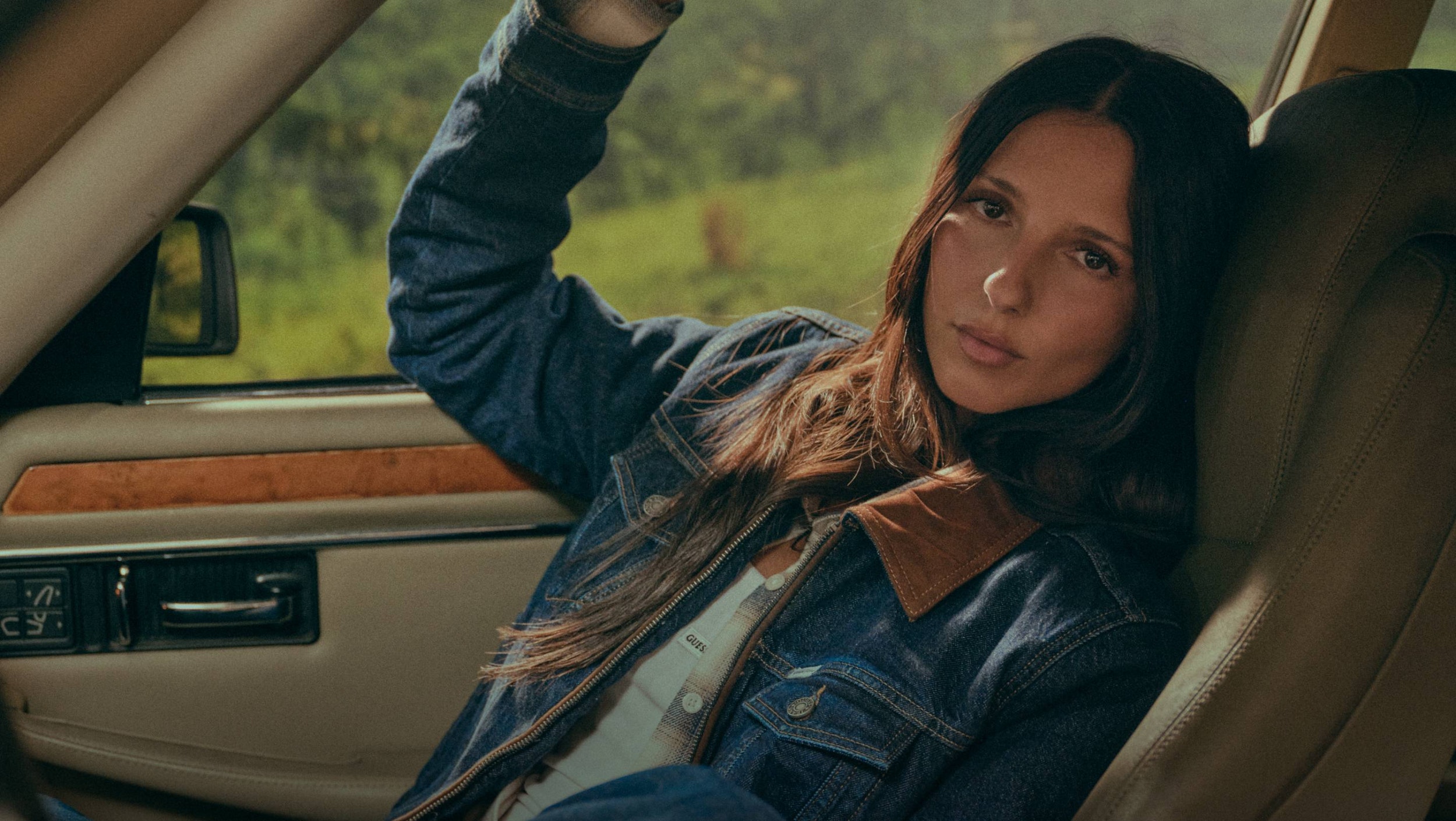
Is GUESS JEANS a diffusion line?
“Diffusion line” is a familiar way to describe a secondary brand associated with a larger fashion house. In this case, however, it can give the wrong impression: GUESS JEANS is not simply the cheaper tier of GUESS.
Guess, Inc. identifies GUESS JEANS as its own brand, with a separate denim-oriented identity. It was developed to give the company’s denim heritage a more focused place in its portfolio. The main GUESS label continues alongside it, with its own broader product range.
So it is more useful to think of GUESS JEANS as a sister brand with a denim specialism than as a step down in quality. Both labels offer different styles and price points, and prices can vary by product, market and promotion. Compare the individual item rather than assuming one label is always less expensive.
What does each label look like in practice?
GUESS: a broad fashion wardrobe
The main GUESS label makes sense if you want to shop across categories. Denim sits alongside items such as dresses, shirts, jackets and accessories, so you can build a look around a particular occasion or style direction.
Its jeans range also offers a choice of fits and finishes. On the official US site, the main GUESS and GUESS JEANS categories appear separately within the wider jeans selection. That is a useful reminder: seeing “GUESS” on a retailer’s denim page does not always mean every listed item belongs to the main label.
GUESS JEANS: denim at the centre
GUESS JEANS is the more direct starting point if the fit, wash or cut of your jeans is the priority. Its collection includes named and numbered fits, as well as denim jackets and casual pieces designed to work with the core denim offer.
The brand also highlights GUESS AIRWASH™, a denim-finishing approach developed with Jeanologia and presented as a way to reduce water use in the finishing process. If sustainability is part of your decision, look for product-level information about fabric and production methods; a brand-wide initiative does not automatically apply to every garment.

How to choose: a practical buying guide
1. Start with the outfit you need
Choose GUESS if you are shopping for a wider range of fashion pieces or want denim as part of a more varied wardrobe. Choose GUESS JEANS if you are beginning with denim and want to explore a collection built around that category.
Neither is a universal “better” choice. The right one depends on the piece and how you plan to wear it.
2. Pick the fit before the label
Fit names and silhouettes matter more than the brand distinction alone. Compare the rise, leg shape and hem width with jeans you already wear comfortably. A slim fit will sit closer to the leg; a straight cut generally keeps a more even line; relaxed and baggy styles leave more room through the leg.
Check each product’s measurements and fit notes where available. The same size can feel different across cuts, fabrics and seasons.
3. Compare wash and fabric details
A dark, clean wash can feel more polished and easy to dress up. Faded or distressed denim usually reads more casual. Look at the fabric composition too: stretch content can affect movement and fit, while mostly cotton denim may feel firmer at first.
For online purchases, use the product description and size guide rather than relying on the label alone. If you are comparing across international stores, check the local size chart and currency before ordering.
4. Read the product label carefully
Look for the full brand name on the product page, tag or retailer filter. GUESS, GUESS JEANS and other GUESS-associated names are not necessarily interchangeable. A retailer may group several brand names together in one category, so confirm the label on the specific item.
It is also worth checking the return terms before buying, especially when ordering internationally. Sizing and fit can vary, and return windows or costs may differ between sellers and markets.

Which one should you buy?
Choose GUESS for the broader lifestyle assortment, or when a particular piece from its main collection catches your eye. Choose GUESS JEANS when you want a denim-centred range and a more casual, jeans-first point of view.
For either label, the best purchase is the one that fits well, works with clothes you already own and feels right for your budget. Check the cut, fabric, wash and product details first; the label is useful context, but it should not make the decision for you.
For a broader look at denim styling, explore the women’s jeans and trousers selection at 78+ Designers, where competitive pricing makes it easier to compare denim across premium labels.
