

Table of Contents
- Why Finding Unique Designer Pieces Online Beats the High Street
- Best Luxury Resale Sites UK Shoppers Should Know
- How to Authenticate Designer Bags Before You Buy
- Tips for Buying Vintage Designer Clothing That Lasts
- Pricing, Negotiation and What You Are Actually Paying For
- Building a Cohesive Wardrobe of Unique Designer Pieces
- Common Mistakes When Finding Unique Designer Pieces Online
- Frequently Asked Questions
Last Updated: September 12, 2026
Why Finding Unique Designer Pieces Online Beats the High Street
Finding unique designer pieces online is now the most reliable way to build a wardrobe that does not look like everyone else’s. The high street copies trends at speed, which means the same coat appears on a dozen people in the same postcode. Independent and resale platforms solve that problem by putting genuinely distinctive stock in front of you.
This guide from 78+ Designers covers where to look, how to spot fakes, and how to avoid the mistakes that cost people money.
The shift is structural, not a passing trend. Resale and vintage platforms have moved from niche to mainstream, and the Competition and Markets Authority guidance on online shopping rights sets out what you are entitled to when a purchase goes wrong. Knowing that framework before you spend makes the whole process less risky.
Best Luxury Resale Sites UK Shoppers Should Know
The best luxury resale sites fall into three groups: curated multi-brand marketplaces, specialist vintage dealers, and peer-to-peer platforms. Each suits a different kind of buyer.
- Curated marketplaces vet sellers and authenticate stock before listing. Higher prices, fewer surprises.
- Specialist vintage dealers focus on a single era or category. Best for archive pieces.
- Peer-to-peer platforms offer the widest range and the lowest prices, but you carry more of the authentication risk yourself.
A common mistake is treating all three as interchangeable. They are not. If you want a specific archive piece, a specialist dealer will find it faster than any general marketplace. If you want volume and choice, peer-to-peer wins on range but demands more diligence.
The Chartered Trading Standards Institute guidance for consumers is worth reading before you buy from an unfamiliar seller, particularly on returns.
How to Authenticate Designer Bags Before You Buy
Authentication comes down to four checks: hardware, stitching, date codes, and provenance. Get two of those wrong and you should walk away.
Start with the hardware. Genuine zips feel weighted and run smoothly; the teeth are uniform and the pull has clean engraving rather than laser-etched lettering. Next, examine the stitching. Luxury houses use tight, even, consistent stitches. Irregular spacing, loose threads, or a wobbly seam are red flags.
Date codes and serial numbers matter, but they are not proof on their own. Counterfeiters copy codes. What you want is a code that matches the era of the bag and a seller who can explain where it came from. Ask for the original receipt, dust bag, or box. A seller who cannot account for a bag’s history is a seller worth avoiding.
Never authenticate a bag from photos alone on a peer-to-peer platform. Ask for a video call showing the interior label, hardware engraving, and stitching under natural light. Sellers who refuse are almost always hiding something.
Tips for Buying Vintage Designer Clothing That Lasts
Vintage clothing lasts when you buy for construction, not for the label. Check the fabric composition tag first, then the seams, then the lining.
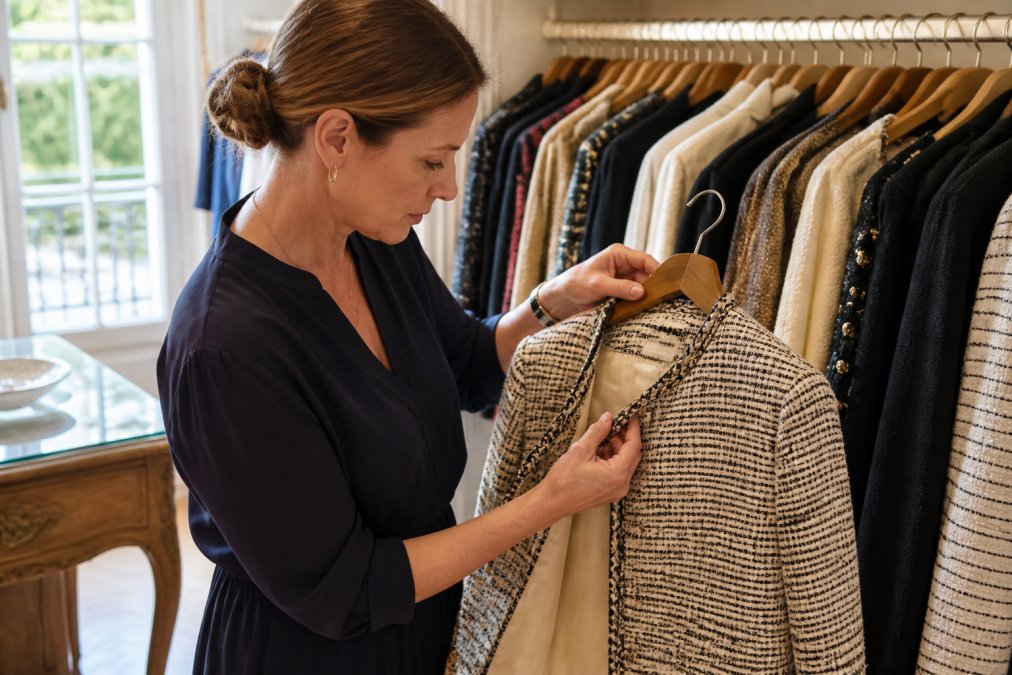
Natural fibres hold up better over decades than synthetic blends. Wool, silk, cashmere, and linen age well if they have been stored properly. Polyester from the same era often pills and loses shape.
Look at the seams from the inside. French seams and bound edges signal quality manufacturing. A single overlocked edge on a supposed luxury piece is a warning sign.
What most guides miss is the storage question. Ask how the piece has been kept. Garments stored on wire hangers in damp conditions will have shoulder distortion and mildew, no matter how good the label.
Pricing, Negotiation and What You Are Actually Paying For
Pricing on resale platforms is rarely fixed, and negotiation is expected on peer-to-peer sites. On curated marketplaces, the price is usually the price.
What you are paying for breaks down into three parts: the brand, the condition, and the scarcity. A current-season piece in excellent condition commands close to retail. An archive piece from a discontinued line can exceed original retail because supply is finite.
- Brand premium: what the label alone adds
- Condition premium: unworn with tags versus visible wear
- Scarcity premium: how few comparable pieces are listed
A common mistake is overpaying for a common piece simply because it carries a designer name. Check how many identical or near-identical listings exist before you commit. If there are twenty, you have leverage.
Search the sold listings, not the active ones. Active prices tell you what sellers hope to get. Sold prices tell you what buyers actually paid, which is the only number that matters when you negotiate.
Building a Cohesive Wardrobe of Unique Designer Pieces
A cohesive wardrobe of unique pieces starts with a colour and silhouette framework, not with shopping. Decide the three or four tones you wear most, then buy only pieces that fit that palette.
This is where most people go wrong. They buy striking individual pieces that do not talk to each other, and end up with a wardrobe of orphans. The fix is boring but effective: pick a base of neutral tailoring, then add distinctive pieces that work with at least three existing items.
At 78+ Designers, we curate with this in mind, because a wardrobe of statement pieces that never combine is not a wardrobe. It is a collection.
- Choose 3-4 core tones
- Confirm each new piece matches at least 3 existing items
- Prioritise fit over label
- Cap statement pieces at one per outfit
Common Mistakes When Finding Unique Designer Pieces Online
The most expensive mistakes are avoidable, and they repeat across almost every buyer.
Buying on impulse during a flash sale is the biggest one. Scarcity messaging pushes people past the authentication checks they would normally run. The second is trusting a seller’s own authentication claim without independent verification. The third is ignoring return terms, particularly on peer-to-peer platforms where returns are often at the seller’s discretion.
A fourth mistake is sizing by label rather than measurement. Vintage sizing runs differently from modern sizing, and a vintage size 12 is not a contemporary size 12. Always ask for flat measurements and compare them to a garment you already own.
The Information Commissioner’s Office guidance on your data rights is a useful reminder that any platform holding your payment and address details has obligations to you, which is worth knowing if a dispute escalates.
The real challenge with finding unique designer pieces online is not access, it is judgement. Knowing what to check, what to pay, and what to walk away from separates a wardrobe that lasts from a drawer of regrets.
78+ Designers exists to make that judgement easier, with a curated selection of premium men’s and women’s clothing and accessories, a 30-day return policy, a 30-day money-back guarantee, and 24/7 support with live web chat. Shipping is available worldwide.
Get started with 78+ Designers and build a wardrobe of distinctive pieces that actually work together.
Frequently Asked Questions
What are the best websites for finding rare designer fashion?
The best options fall into three groups: curated resale sites, archive and vintage specialists, and marketplace platforms where individual sellers list pieces. Curated sites tend to vet items before listing, which reduces risk but limits choice. Marketplaces offer more volume and rarer finds, but you carry more of the authentication burden yourself. For genuinely rare or archival pieces, specialist vintage dealers often beat general resale sites because they source directly and can tell you a garment’s history. Whichever route you take, check the returns policy before buying, since rare pieces are harder to exchange.
How can I verify the authenticity of designer items bought online?
Start with the details that are hardest to fake: stitching consistency, hardware weight and engraving, label typography, and date codes or serial numbers. Ask the seller for close-up photographs of each of these before committing. On how to authenticate designer bags specifically, check the interior label alignment and the font used, as counterfeiters frequently get spacing and letterforms wrong. For higher-value purchases, a paid authentication service or a qualified independent expert is worth the cost. Keep the listing, photographs and payment record, as these support a claim if the item turns out to be fake.
Is it safer to buy vintage designer pieces from marketplaces or boutiques?
Boutiques and specialist dealers carry less risk because they inspect pieces before listing and usually offer a returns window. Marketplaces give you access to a wider range and often lower prices, but protection depends on the platform’s dispute process rather than the seller’s expertise. If you are new to vintage, start with a boutique or a curated resale site so you can handle a few genuine pieces and learn what quality feels like. Once you can judge fabric weight, lining construction and label details yourself, marketplaces become a reasonable option for tips for buying vintage designer clothing at better value.
How do I spot a fake designer item online?
Watch for prices that sit far below the going rate for that piece, stock photographs instead of images of the actual item, and sellers who resist requests for extra detail shots. Genuine listings usually show the label, hardware and any flaws honestly, because flaws prove the item is real and used. Check that the brand’s logo, font and spacing match known examples, and be wary of new accounts with no selling history. If a seller pressures you to pay outside the platform, walk away, as you lose any dispute protection once payment leaves the site.
