

Colombo is a name worth knowing if you look beyond a coat’s silhouette to the cloth that shapes it. The Italian company Lanificio Luigi Colombo is known for working with cashmere and other fine fibres, as well as developing specialist fabrics for outerwear. Its approach is a useful lesson in what to look for when considering a luxury coat: fabric construction, fibre content, finishing and how the garment will work in your wardrobe.
This is a guide to the details that make Colombo distinctive, not a claim that every piece carrying the name is the same. Fabric blends, finishes and designs can vary by style and season, so the garment label and product description remain the best guides to any particular coat.
A textile heritage, not just a coat label
Lanificio Colombo’s story is rooted in fabric making in Italy’s Valsesia region. The company describes its work as spanning the development of fine textiles through to finished garments. Its heritage is especially associated with double-face cloth: a construction it says it helped pioneer in cashmere during the 1970s and 1980s.
That specialism matters because outerwear depends on more than appearance. The cloth affects how a coat drapes, feels, holds its shape and layers over clothing. Colombo’s account of its double-fabric tradition explains the technique behind one of its signature materials.
For shoppers, the practical takeaway is simple: a specialist fabric house may offer details worth investigating beyond the brand name. Look for a clear composition, a useful description of the weave or finish, and close-up images that show the surface and seams.
What double-face cashmere means
Double-face cloth is made by weaving two layers together and joining them with a fine binding thread. Rather than attaching a separate lining in the usual way, the construction creates one integrated fabric. Depending on the design, both sides may be visible, or the garment may be finished with selected seams and edges exposed.

The appeal is partly tactile and partly practical. A coat made from a double fabric can have a clean, unlined appearance, with the material itself providing structure and a soft hand. It can also feel less bulky than some lined styles, though warmth and weight depend on the exact cloth, garment design and weather conditions.
Colombo’s double cashmere coat is a useful example of why reading the full specification matters. Its listed composition is 82% cashmere, 7% wool, 7% cotton and 4% linen, not pure cashmere. The brand describes its fabric as brushed and notes silk details. A blend is not automatically a compromise; it simply means that the coat’s character comes from a particular combination of fibres and finish.
Cashmere 4.0: a focus on lightness
Another Colombo material concept is Cashmere 4.0. The company describes it as cashmere transformed into a hollow-core yarn, intended to combine lightness with resilience and comfort. The idea is relevant for outerwear that needs to feel polished without becoming cumbersome.

The term is a branded textile concept, rather than a universal grade of cashmere. If you see it on a garment, check the product details for the actual composition, lining, weight and care instructions. Colombo’s Cashmere 4.0 overview offers the company’s explanation of its process and intended benefits.
A lighter coat can be a useful choice for travel or transitional weather, but “lightweight” does not mean suitable for every climate. Consider what you will wear underneath, whether the coat closes securely and how often you expect to use it in rain or wind.
Silhouette and styling: choose for your routine
The range of Colombo outerwear includes classic coats as well as jackets and more relaxed styles. A long, single-breasted coat can sit comfortably over tailoring or knitwear, while a shorter jacket may feel more natural with denim, trousers and everyday layers. Belted styles allow you to adjust the shape; straighter cuts tend to offer a more relaxed outline.
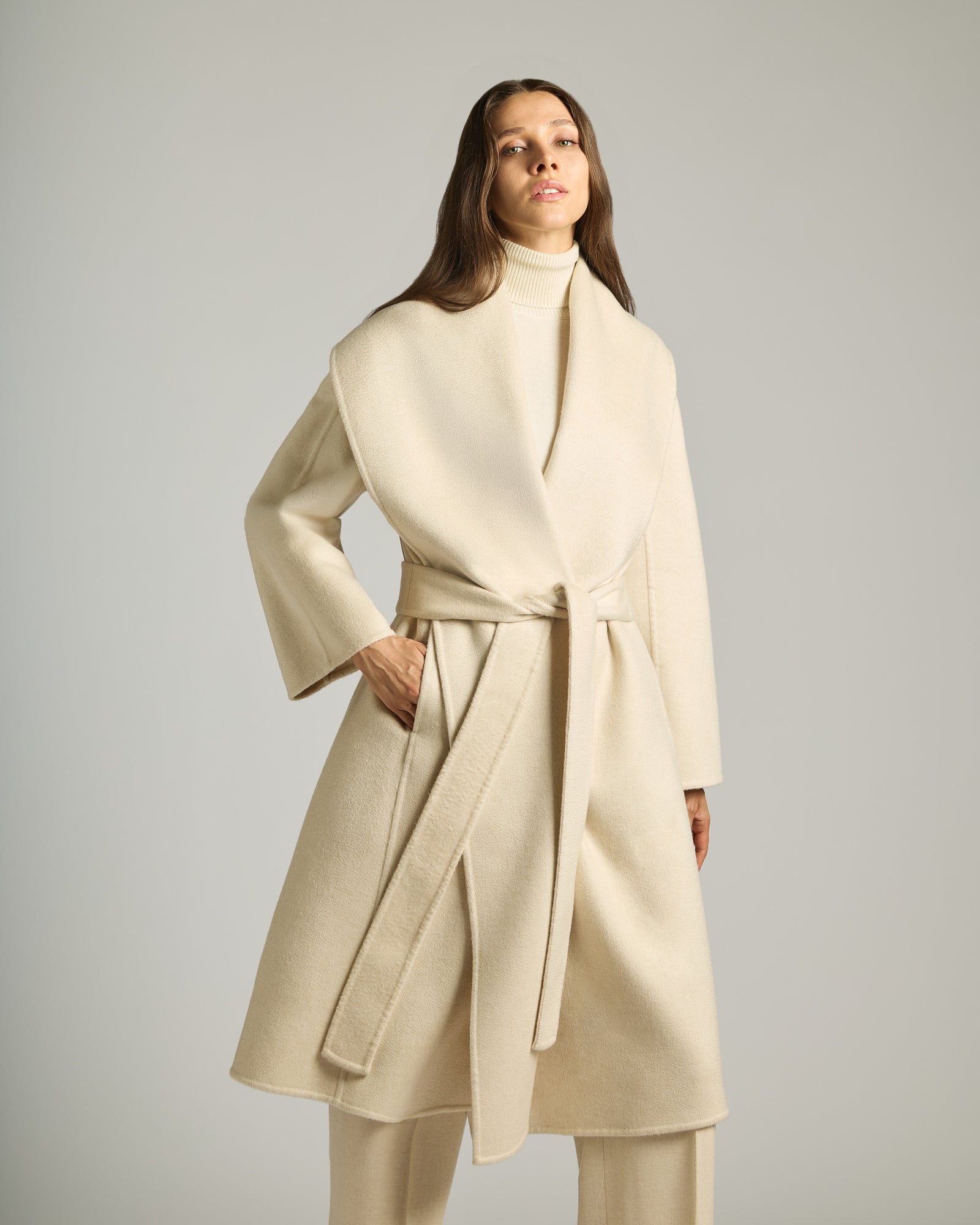
The Yangir coat illustrates a more distinctive approach. Colombo describes it as made from 100% Yangir cashmere, with a belted waist, clean single-breasted front and two pockets. The product page identifies the fibre as the golden undercoat of the Siberian ibex and gives a fineness figure of about 13.5 microns. These are specific details presented by the maker for this material and product, not a specification that applies to cashmere generally.
When assessing any coat, consider the fit over your usual layers. Check shoulder placement, sleeve length and how the garment closes when worn open or fastened. If ordering online, compare the brand’s size chart with a coat you already own that fits well. A little extra room can be useful for layering, but excess fabric may change the line and make a refined coat feel less versatile.
A practical checklist before you buy
Luxury outerwear is a considered purchase. These checks can help you compare pieces on useful terms:
- Read the fibre composition. Confirm whether the coat is pure cashmere or a blend, and note the share of each fibre.
- Look beyond the fabric name. A proprietary term may describe a construction or process; the product specification tells you what the garment contains.
- Check the finish. Brushed, smooth and double-face surfaces feel and wear differently. Product images can help, but descriptions and close-up views are useful too.
- Think about the climate. Construction, lining, length and closure all influence how a coat works in your usual conditions.
- Review care guidance. Delicate fibres need appropriate storage and cleaning. Follow the sewn-in label rather than assuming all cashmere should be treated alike.
- Choose a shape that earns its place. A neutral, simple coat can work across occasions; a more distinctive colour or detail can make a strong statement but may be less adaptable.
For more on choosing clothing with material in mind, see 78+ Designers’ practical guide to why quality fabrics matter.
The appeal of Colombo
Colombo is worth knowing for its focus on fabric development and the way that expertise translates into outerwear. Double-face cashmere offers a considered, softly structured alternative to a conventional lined coat, while Cashmere 4.0 reflects an interest in refining the material for lighter wear. Specific examples, from blended double-face cloth to the Yangir coat, also show why it is important to judge each garment on its own composition and construction.
The best coat is not necessarily the rarest fibre or the most elaborate design. It is the one whose weight, cut and care requirements suit the way you dress. Explore the details, compare the fit and choose a piece you can wear with confidence. If you are browsing designer clothing at 78+ Designers and need help with a product detail, our team is available through 24/7 live web chat.
