

When temperatures fall, a serious parka is more than a warm layer. It is a carefully considered system of insulation, coverage, weather protection and fit. That is where the comparison between Canada Goose and Moose Knuckles becomes interesting: both are Canadian outerwear names with ambitions for cold-weather performance, but their signature designs express different priorities.
One leans into expedition heritage and protective function. The other brings a bold, fashion-led sensibility to technical winter dressing. Neither philosophy is automatically right for everyone. The better choice depends on your climate, daily routine and the silhouette you want to wear.
Canada Goose: protection first
Canada Goose’s extreme-cold approach is easy to see in its Expedition and Snow Mantra parkas. The brand describes the Expedition as a design created in the 1980s for scientists at McMurdo Station in Antarctica. Its contemporary details are still shaped around reliable coverage: a down-filled adjustable hood, drawcord waist, rib-knit cuffs, snow skirt and storm flap over the two-way zip.
The Expedition Parka is rated TEI 5, for temperatures of -22°F and below. It has a roomy fit designed to allow layering, and its many pockets reflect the practical logic of the design. Instead of treating warmth as a single insulation figure, this approach considers how the entire garment works together: hood, cuffs, hem, shell and coverage all help limit exposure to cold.
The Snow Mantra takes that functional thinking further. Its features include a wire-shaped tunnel hood, a fleece-lined wind guard, reflective tape, reinforced elbows and 14 purpose-built pockets. These are details developed around demanding work in severe conditions, not simply added for visual effect.

The Expedition Parka’s generous proportions and layered closures reflect a protection-first design approach.
This makes Canada Goose especially appealing if you spend long periods outdoors, face strong wind or snow, or want a coat that accommodates substantial layers. Its expedition-inspired designs tend to look purposeful and substantial. That presence is part of the appeal, though it may feel like more coat than you need for a mild winter or a mostly indoor routine.
Moose Knuckles: warmth with a sharper fashion edge
Moose Knuckles also takes cold-weather performance seriously, but its signature pieces often bring a more pronounced fashion attitude. The brand’s design language combines substantial insulation and protective details with distinctive hardware, sculpted shapes and, on some styles, shearling trim. The result is outerwear that feels at home in the city as well as in cold conditions.
The Original 3Q Down Jacket is a useful example. Moose Knuckles lists it as Warmth Level 4, or “Canada Cold,” for -20°C to -30°C. The current product page specifies 800-fill-power RDS-certified 90/10 down, a water-repellent and wind-resistant finish, a down-filled collar and a removable shearling-trimmed hood. Those published details give shoppers a clearer model-specific picture of insulation and intended conditions.
Its identity, however, is not just about technical credentials. The 3Q’s distinctive finish and bold hardware make it a visible style choice. In a Forbes interview on the label’s design outlook, the brand’s ambition is described as marrying warmth with a more flattering alternative to the traditional boxy “sleeping bag” look.
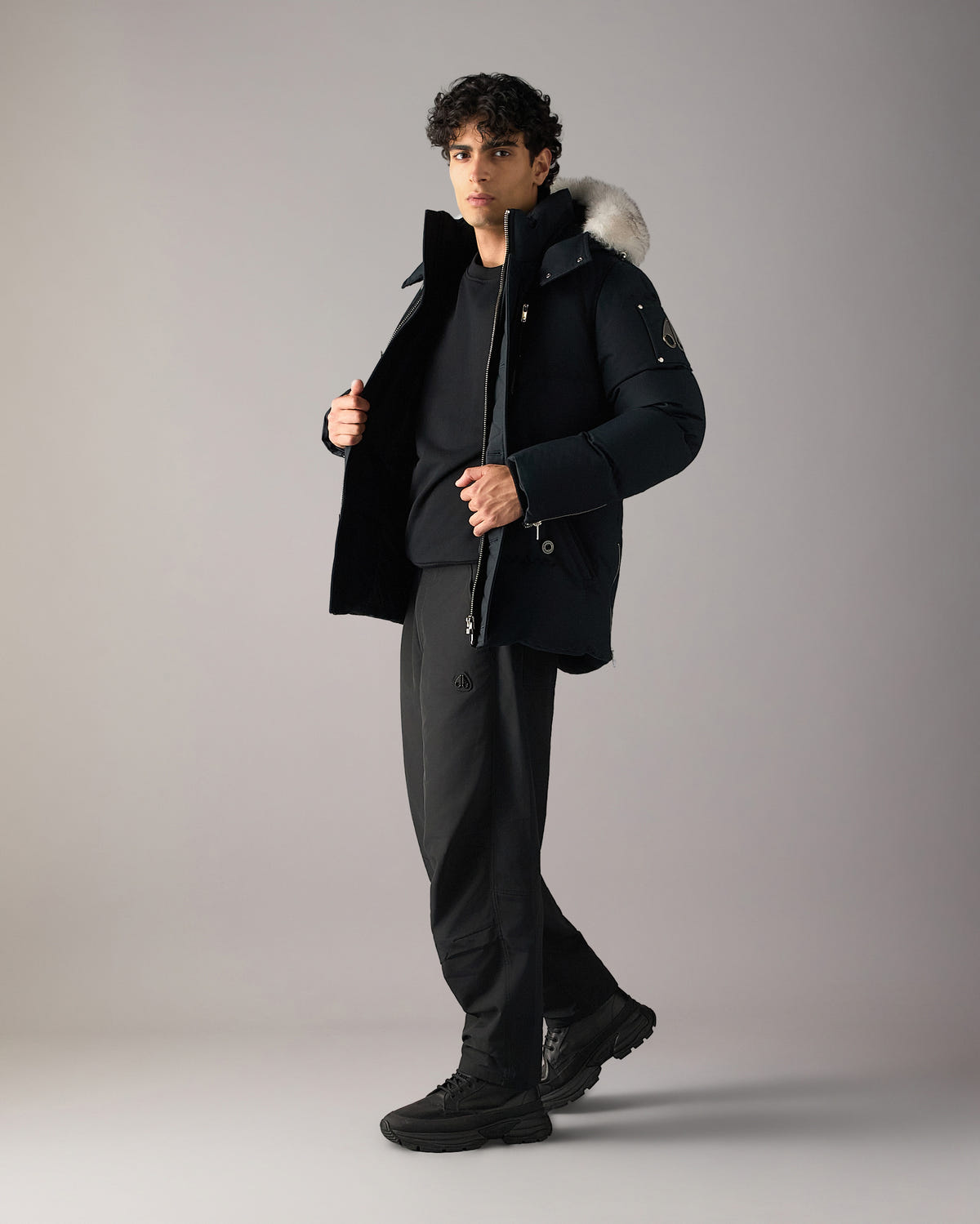
The Original 3Q pairs cold-weather features with a distinctive city-ready look.
Fit is a practical part of this philosophy. A more shaped silhouette can feel polished and easy to style, but it leaves less room for bulky layers than an oversized expedition parka. Check the garment’s measurements and the brand’s fit guidance, then consider what you plan to wear beneath it. The right fit should allow comfortable movement and layering without compromising the look you want.
Two different answers to extreme cold
It is tempting to compare warmth by looking for one decisive number. In practice, that can be misleading. Canada Goose’s TEI rating and Moose Knuckles’ warmth levels are brand-specific systems, and a temperature rating is not a controlled, head-to-head test. Fit, activity, wind, moisture, base layers and how long you remain outdoors all affect how warm a parka feels.
The clearer contrast is in the design priorities:
| Canada Goose | Moose Knuckles | |
|---|---|---|
| Design emphasis | Expedition-inspired coverage and practical details | High warmth with a distinctive, fashion-led finish |
| Silhouette | Often roomy to support layering and movement | Style varies by model; signature designs can feel more sculpted |
| Details to look for | Storm flaps, snow skirts, protective hoods and utility pockets | Down-filled collars, protective cuffs, shearling trim and bold hardware |
| A natural fit for | Severe weather, extended outdoor time and substantial layering | Cold-weather city dressing with a strong designer presence |
These are broad design tendencies, not rules for every piece. Both labels offer different styles, and the exact model matters more than the brand name alone. Even within one collection, a shorter jacket and a long parka may serve very different needs.
Which one suits your winter?
Choose a Canada Goose model if your first question is, “How does this protect me when the weather turns harsh?” Look closely at its coverage, weather-sealing features and room for layers. An expedition-inspired parka may be a particularly practical option for outdoor work, travel to colder regions or long stretches outside.
Consider Moose Knuckles if you want performance details combined with a more assertive luxury-fashion look. Check the model’s warmth level and material information carefully: not every parka in a brand’s range is designed for the same temperatures. The Original 3Q, for example, carries a different published warmth rating from the brand’s current Original Stirling 2.0, illustrating why model-level comparisons matter.
Before deciding, ask yourself:
- What are my typical winter conditions? Cold and dry, wet and windy, or occasionally severe?
- How long will I be outside? A short city commute calls for different coverage from a full day outdoors.
- What will I layer underneath? Try the coat with the knitwear or mid-layer you expect to wear.
- How important is silhouette? A spacious fit prioritises ease and layering; a closer shape creates a different look and feel.
- Which details will I actually use? Hood adjustment, cuff design, pocket placement and snow protection can matter more than a headline insulation number.

Small details, from a secure closure to a comfortable cuff, can make a noticeable difference in daily wear.
The considered choice
Canada Goose and Moose Knuckles are not simply competing to make the same coat. Canada Goose’s most extreme models put protection, coverage and expedition utility at the centre. Moose Knuckles brings cold-weather construction into a more visibly fashion-conscious design vocabulary. Both can make sense in a demanding winter; the best choice is the one that suits your conditions, fit preferences and everyday wardrobe.
For another perspective on building a versatile designer wardrobe, explore the women’s clothing selection at 78+ Designers. The current winter sale includes savings of up to 48% on selected pieces.
