

Few garments carry British fashion history as naturally as the trench coat. For more than a century, Burberry and Aquascutum have each shaped its story, pairing practical weather protection with considered tailoring. Their shared military associations make the labels easy to compare, but their identities, and the details that distinguish them, are not quite the same.
So, when weighing a Burberry vs Aquascutum trench coat, the choice is less about declaring a winner and more about deciding which heritage, design language and fit feels right for your wardrobe.
Two houses, one enduring coat
Aquascutum’s story began in London in 1851, when tailor John Emary opened a business focused on outerwear. The company says Emary developed a water-repellent wool fabric in 1853; its name, Aquascutum, combines the Latin words for water and shield. The house’s weatherproof coats were associated with British military customers, including during the Crimean War.
Burberry’s best-known contribution came later. Its founder, Thomas Burberry, invented gabardine in 1879. The tightly woven cloth was designed to repel rain while remaining breathable, a significant advance on heavier waterproof materials. The Burberry heritage account traces the house’s trench coat to this fabric and its history of practical outerwear.

Both labels have credible links to military outerwear, but it is best not to reduce the modern trench to a single inventor. Its familiar features (double-breasted fronts, belts, shoulder straps and protective storm flaps) developed through practical use and changing designs. The Smithsonian’s history of the trench coat offers useful context for that wider story.
Burberry: gabardine and a recognisable silhouette
Burberry’s trench identity starts with fabric. Gabardine is central to the house’s account of its heritage, and its trench coats are associated with a clean, structured look and classic military-inspired details. The house’s current heritage range includes different proportions, from the more tailored Kensington to the more relaxed Waterloo. These distinctions matter: “a Burberry fit” is not one universal shape.
The Burberry Check is another instantly recognisable signature. Introduced as a lining in the 1920s, it became a defining house code, though not every trench displays it in the same way. Depending on the coat, the check may be visible inside rather than dominating the outer design.
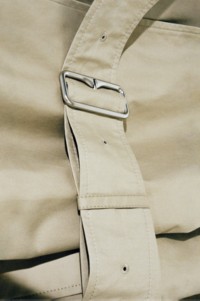
Who it suits: Burberry is a natural fit if you appreciate a coat with an unmistakable heritage identity, gabardine craftsmanship and a tailored, composed appearance. A more structured cut can work well over smart clothing; a roomier option may suit layered everyday wear.
What to buy first: Begin with a classic, neutral-coloured heritage trench in the cut that matches how you plan to wear it. Choose a more tailored silhouette for a polished finish, or look at a relaxed shape if you expect to layer over knitwear and jackets. Check the fabric and care details for the specific model rather than assuming every trench uses identical construction.
Aquascutum: weatherproof tailoring and Club Check
Aquascutum’s point of difference lies in its early focus on water-resistant cloth and its long association with tailored outerwear. The label’s history of the trench highlights its wartime coat-making, as well as the development of the Kingsway model in 1930. The brand describes Kingsway as a cotton version of its earlier military trench design.
The house’s signature Club Check offers a different visual accent from Burberry Check. Aquascutum dates its introduction to 1976, when it was created to mark the company’s 125th anniversary. Its navy, trench-beige and vicuna-brown palette appears in linings and other accessories. It is a distinct house pattern, not a variation on Burberry’s check.

Aquascutum also draws attention to traditional trench details such as raglan sleeves, a protective back yoke and D-rings. These features have practical or historical origins, though their presence and execution vary by coat. The brand’s history page notes that its trenches can be made from many components and pass through numerous production steps: an emphasis on construction as much as appearance.
Who it suits: Aquascutum may appeal if you prefer a quieter expression of British heritage, with the Club Check as a considered detail rather than a bold exterior statement. Its tailoring legacy makes it worth considering for a wardrobe that moves between workwear and everyday dressing.
What to buy first: Look for a traditional cotton trench in the Kingsway tradition, where available. A neutral shade offers the most flexibility, while the Club Check lining gives the coat a recognisable detail when worn open. Check the exact product’s fabric, lining and measurements; styles and availability can differ by collection and market.
Fit, details and the right first choice
A trench should allow comfortable movement and leave room for the layers you expect to wear beneath it. Compare the shoulder, chest and sleeve measurements, and consider where the hem will sit on your frame. The belt should fasten without pulling the fabric tight. A sharply fitted coat may look elegant over lighter clothing but feel restrictive over a suit or thick knit; a relaxed fit can be more practical for layering.
For both labels, look beyond the name at the individual garment. Check whether the fabric is cotton, gabardine or another material; whether the coat is lined; and how its weight suits your climate. Inspect practical details such as button closure, pockets and sleeve adjusters, too. If you are shopping online, product measurements are more reliable than assumptions about how an entire brand fits.
In short, choose Burberry if its gabardine heritage, structured options and distinctive check feel most like you. Choose Aquascutum if you are drawn to its earlier weatherproofing history, tailored tradition and Club Check identity. Neither choice needs to be a contest: both offer different interpretations of a versatile British classic.
Explore the trench coat selection at 78+ Designers for more styles to consider. If you would like help checking sizing before you choose, 78+ Designers offers 24/7 customer support via live web chat.
