

The trench coat is one of fashion’s most enduring pieces, but its history is richer than its familiar belt and double-breasted front suggest. Aquascutum is a British name closely tied to that story: a London-founded house whose coats were shaped by practical needs, then refined into wardrobe classics.
Here’s what to know about Aquascutum’s heritage, the details that make a trench distinctive, and how to choose a fit that works for your everyday wardrobe.
A brief history of Aquascutum
Aquascutum traces its beginnings to London in 1851, when tailor John Emary established his business. In 1853, he developed a water-repellent fabric treatment. The name Aquascutum combines the Latin words aqua (water) and scutum (shield), a fitting reference to the label’s early focus on weather-resistant clothing.
The trench coat wasn’t simply invented in the trenches of the First World War. Long, protective coats already existed, and military use helped develop the garment’s familiar shape and practical features. Aquascutum’s own history connects its coats with military wear in the Crimea and First World War.
In 1930, the house introduced the KINGSWAY: a cotton version of an earlier wool trench design, intended to bring the style into civilian life. The Club Check lining followed in 1976, becoming a recognisable signature. Its navy, beige and brown palette nods to British club tailoring, traditional trench colours and fine materials.
Read more about the brand’s trench-coat history and design.
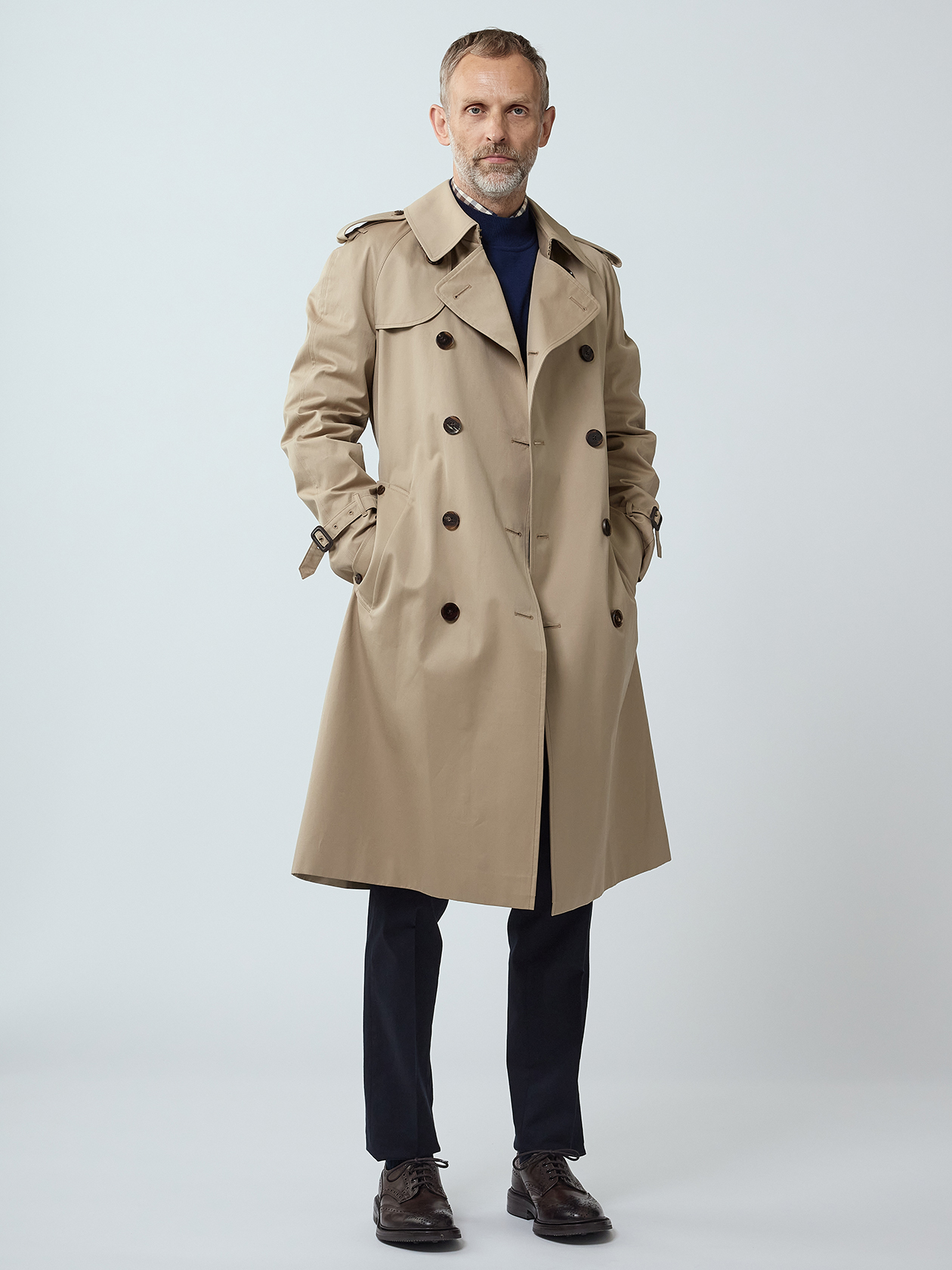
The details that earn their place
A classic trench has plenty of visual character, but its details began as practical solutions. Knowing what they do can help you distinguish a traditional design from a simpler coat inspired by it.
- Double-breasted front: The overlapping panels offer extra coverage and a structured look.
- Raglan sleeves: The diagonal sleeve seam allows room for movement and makes the coat comfortable over layers.
- Epaulettes: These shoulder tabs have military origins, but today they mainly contribute to the recognisable trench silhouette.
- Gun flap: Originally associated with cushioning the shoulder during rifle use, it now serves as a design feature and can help direct water away from the coat.
- Storm yoke: A layered panel across the back helps protect the shoulders from rain.
- Sleeve straps: These can be adjusted at the cuffs to create a closer fit.
- Belt and D-rings: The belt shapes the waist. D-rings recall the coat’s military background and are often decorative on modern versions.
Aquascutum describes its trench construction as involving numerous interlinings and reinforcement details. That care is part of the appeal of a heritage coat: some of its quality is visible in the silhouette, and some is built into the structure.
Choosing the right trench fit
A traditional trench is designed to be worn over clothing, not fitted like a lightweight blazer. The aim is enough room to move and layer comfortably, without excess fabric that makes the coat feel cumbersome.
Start with the shoulders and chest. Button the coat over a shirt or knit you would normally wear beneath it. You should be able to reach forward and move your arms without pulling across the chest or buttons. If the coat has raglan sleeves, check that the underarm feels comfortable when you lift your arms.
Use the belt to shape the waist. Avoid sizing down just to create a close, defined silhouette. Choose a size that fits comfortably through the chest and shoulders, then adjust the belt. If the fabric pulls into diagonal lines when the coat is fastened, it may be too small.
Consider the length. A knee-length trench is a versatile option for work and everyday wear. A shorter cut can feel lighter and easier for commuting; a longer style gives more coverage and a stronger heritage impression. Think about the clothes and shoes you’ll wear most often before deciding.
Check sleeve length and layering room. The cuff should sit comfortably around the wrist and cover the sleeve of the garment underneath. Try the coat over your usual layers rather than relying on a T-shirt fit. If you’re between sizes, prioritise chest comfort and the way you intend to wear it.
Modern designs can differ considerably from classic models. For example, Aquascutum Active’s RLG Badge Packable Trench is described as regular fit, mid-length and water-repellent, with a detachable, reversible hood. The product page lists a model who is 189 cm tall wearing size L, and provides a garment size chart. This is a useful reminder to check the measurements for the exact style rather than assuming all trenches from one label fit alike.

Classic gabardine or a lighter modern option?
Fabric changes how a trench feels and functions. A traditional cotton trench has a crisp, substantial hand and a classic drape. Aquascutum’s heritage story highlights water-repellent fabric development, while specific fabrics and finishes vary by model.
Lighter technical versions are often designed for ease of movement, travel or changeable weather. The RLG Badge Packable Trench, for instance, is made from polyester and is described by the product page as water-repellent and packable. That makes it a different proposition from a heritage cotton coat, even though it retains the trench’s recognisable outline.
Before choosing, consider your daily routine. For a coat you’ll wear over tailoring and knitwear, look for a structured style with enough room for layers. If portability and lighter weight matter more, a packable design may suit you better. For any water-repellent garment, follow the care instructions on its product page; performance and maintenance requirements depend on the fabric and finish.
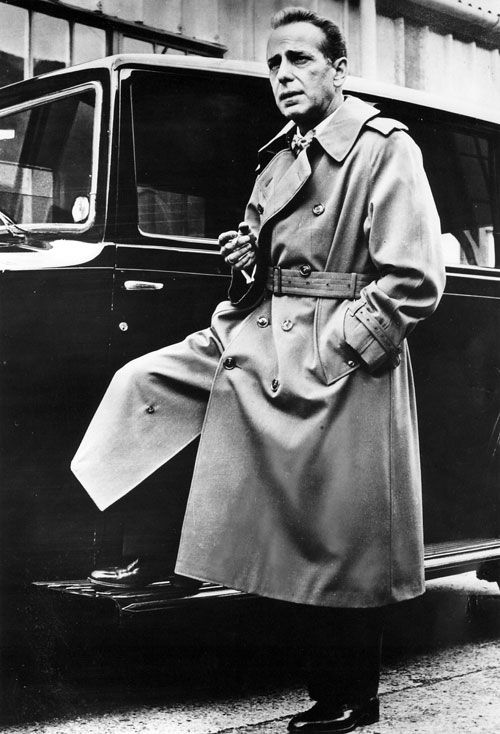
Styling a trench for everyday wear
The trench’s strength is versatility. For a polished city look, wear a beige or navy style over tailored trousers, a fine knit and leather shoes. For a more relaxed combination, layer it over denim and a simple top, leaving the belt loosely tied or undone.
The Club Check lining offers a subtle way to show the house’s heritage. Turn back the cuffs or wear the coat open when the weather allows. If the trench already has prominent details, keep the rest of the outfit simple so the coat remains the focus.
A longer cut pairs well with streamlined footwear and straight-leg trousers. A shorter trench can balance wider trousers or a more casual outfit. These are useful starting points rather than strict rules: proportion, comfort and how you plan to wear the coat matter most.
Is Aquascutum worth considering?
Aquascutum is worth a closer look if you value British outerwear heritage, functional details and a design that can move between formal and casual wardrobes. Its story is not just about a famous silhouette: it links weather-resistant clothing, military-influenced construction and civilian style across generations.
The best choice depends on the specific coat. Compare fabric, lining, length and construction, and use the product’s own size guide before buying. For a classic look, seek out a traditional trench with the details you’ll genuinely use. For everyday convenience, a lighter modern interpretation may be the better fit.
Explore the wider wardrobe at 78+ Designers, including women’s clothing, men’s clothing and accessories, to build a considered look around your outerwear.
